
Automotive Electronics Compliance Certification
Software R&D and testing solutions meeting ISO 26262 and ASPICE automotive functional safety standards.
The Era and Challenges of Software-Defined Vehicles
With the rapid development of technologies such as intelligent driving, new energy vehicles, and the Internet of Vehicles, "Software-Defined Vehicles" has become the general trend. Compared to before 2010, automotive R&D technologies and methods have undergone and are still undergoing tremendous changes, with software becoming one of the most important components in automotive R&D. It is foreseeable that in the near future, emerging technologies such as autonomous driving and V2X will even surpass traditional automotive electronics, occupying a more core position in the automotive software field. Therefore, the reliability and safety of software will also become the top priority of vehicle safety.
Fortunately, major domestic and foreign automotive OEMs, parts suppliers, and industry associations have long foreseen this trend and have successively released relevant industry standards against this background. From the earliest version of the MISRA C coding standard released in 1998, to the Automotive Software Process Improvement and Capability Determination (ASPICE) standard released in 2005, and to the ISO 26262 automotive functional safety standard released in 2011, these industry standards regulate the R&D of key automotive systems and software from multiple angles such as software coding, R&D maturity processes, functional safety, cybersecurity, and safety of the intended functionality (SOTIF), ensuring the safety and reliability of vehicles alongside the rapid development of R&D technologies.
Besides Meeting Compliance, What Other Needs and Challenges Do We Face?
- check_circle What are the specific requirements of standards like ISO 26262, ASPICE, and SOTIF on the software development process and testing?
- check_circle How to balance efficiency, quality, and compliance?
- check_circle Manual or automated, open-source or commercial tools—how to choose?
- check_circle Which parts of the black-box testing, gray-box testing, and white-box testing required by ISO 26262 and ASPICE can be automated?
- check_circle What are the key differences in testing requirements and methods between embedded software and host software?
- check_circle What are the requirements of standards like ISO 26262 and ASPICE for auxiliary automated development and testing tools?
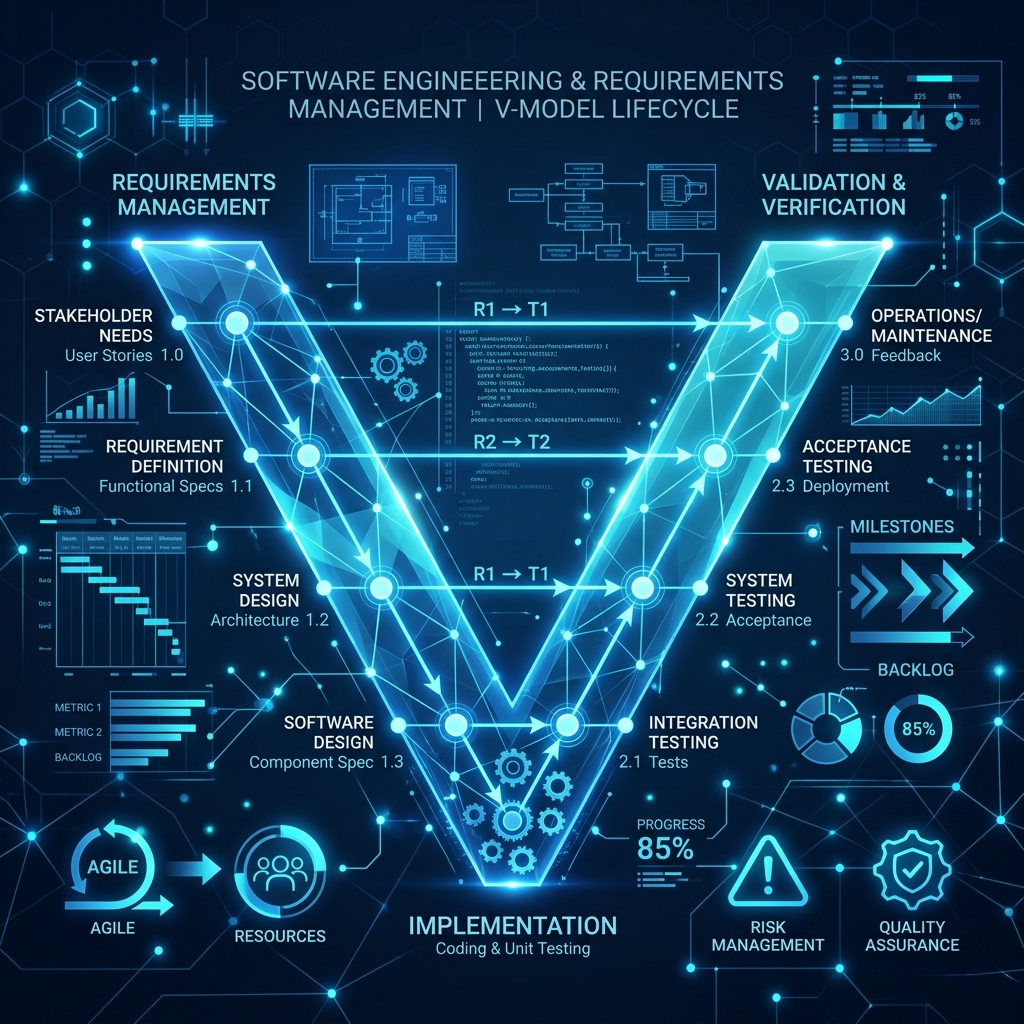
Comprehensive Solutions
Static Code Analysis and Open-Source Compliance
Use authoritative static analysis and open-source composition analysis tools to meet common coding standards in the automotive electronics industry, perfectly complying with ISO 26262 and ASPICE standards for static code analysis.
Unit Testing and High-Performance Compilation
Utilize top-tier development environments and compilers to verify the reliability and correctness of software unit modules, rapidly meeting ISO 26262 and ASPICE requirements for unit testing.
Performance Testing and Deep Debugging
Support system hardware debug probes for trace execution, complex defect backtracking, deep performance testing, and long-term reliability validation.
Hardware-in-the-Loop (HiL) Testing
Integrated HiL system testing platforms provide physical hardware simulation, network diagnostics, and system testing solutions for automotive electronic systems.
Software-in-the-Loop (SiL) Testing
Provide physics-sensor-based Advanced Driver Assistance Systems simulation and software simulation system testing platforms for automotive electronics.
Traceability and Requirements Management
Use professional platforms for requirements management and form traceability covering the software lifecycle, meeting audit requirements for testing completeness at all levels.
Core Capabilities Overview
Static Code Analysis
Black Duck Coverity / SCA
Unified coding standards are the primary requirement when automotive OEMs demand code-level testing from their downstream suppliers, and they are also one of the basic audit points during ISO 26262 and ASPICE compliance certification. MISRA C, MISRA C++, AUTOSAR C++14, CERT C/C++, etc., are the most commonly used rule sets in the automotive electronics industry.Black Duck Coverity Provides fast and accurate Static Application Security Testing (SAST) solutions, quickly and accurately finding non-compliant code and hidden code defects for users to ensure code compliance, allowing common code errors to be fixed right at the beginning of coding. Combined with Black Duck SCA comprehensive Software Composition Analysis, effectively managing open-source risks and license compliance.
Unit Testing
Green Hills Multi IDE
TASKING Compiler
ISO 26262 and ASPICE require testing of low-level design requirements, which is typically accomplished through unit testing. The verification of the reliability and correctness of a single function or a module composed of multiple functions can both be categorized under unit testing. For embedded software with compliance requirements, unit testing is particularly difficult.Green Hills Multi IDE Top-tier integrated development environments and TASKING Compiler compilers optimized specifically for multi-core microcontrollers provide specialized automated and high-performance solutions. Through toolchains designed specifically to improve software execution efficiency and reliability, they help quickly create testing environments, fully complying with the requirements of ISO 26262 functional safety and ASPICE certification.
Performance Testing
Green Hills Probe V4
Utilizing Green Hills Probe V4 high-speed hardware debugging probes can provide deep system visibility and control, tracing the execution process of automotive electronic software over long periods, and instantly measuring and bottleneck-analyzing execution performance across different dimensions such as various functions, modules, tasks, code blocks, and CPU loads during software execution. Compared to traditional testing solutions, this approach is more efficient and makes it easier to locate performance anomalies to the root of the problem in the source code.
Hardware-in-the-Loop (HiL) Testing
TOSUN TSMaster
dSPACE dissecto
By TOSUN TSMaster (universal in-vehicle network and diagnostic simulation testing software) and dSPACE dissecto (automated security testing platform and dedicated test probes), the System Hardware-in-the-Loop (HIL) testing and network analysis platform can provide an integrated physical simulation and testing solution for automotive electronic systems, including test design, test execution, and network analysis. It assists users in accelerating the setup of testing environments, test automation, and automated regression testing, significantly improving testing efficiency and reducing labor costs.
Software-in-the-Loop (SiL) Testing
Simcenter PreScan
Utilizing Simcenter PreScan With Software-in-the-Loop (SIL) testing tools such as physics-sensor-based Advanced Driver Assistance Systems (ADAS) simulation platforms, automotive electronics R&D teams can verify the software's interfaces and logic before the hardware environment is ready. Test cases designed and executed during the SIL testing process can be seamlessly reused in the HIL testing phase. This allows system testing to begin earlier, detecting system functional defects and errors sooner and shortening the project cycle.
Traceability
Siemens Polarion
Using Siemens Polarion unified Application Lifecycle Management (ALM) platforms to manage design processes at various levels from upper-level product design to high-level design and lower-level detailed design, and integrating with commonly used development and testing systems, meets the requirements of the ISO 26262 functional safety standard and ASPICE for software requirements traceability. This achieves bidirectional traceability between all phases of the R&D process, ensuring information consistency across all stages of the R&D workflow and the accuracy of change impact analysis.
Related Products
Black Duck Coverity
Fast and accurate Static Application Security Testing (SAST) platform.
Black Duck SCA
Comprehensive Software Composition Analysis to manage open-source risks and license compliance.
Green Hills Multi IDE
Top-tier integrated development environment designed specifically to improve software execution efficiency and reliability.
TASKING Compiler
Advanced automotive C/C++ compiler optimized for multi-core microcontrollers.
Green Hills Probe V4
High-speed hardware debugging probes providing deep system visibility and control.
TOSUN TSMaster
Universal in-vehicle network and diagnostic simulation testing software.
dSPACE dissecto
Automated security testing platform with dedicated test probes, covering the entire testing lifecycle.
Simcenter PreScan
Physics-sensor-based Advanced Driver Assistance Systems (ADAS) simulation platform.
Siemens Polarion
Unified Application Lifecycle Management (ALM) platform.